
ANTF Latest


WHAT IS TAEKWONDO?
Taekwondo is the world’s most widely practice martial art.
It is an Olympic sport, an artistic discipline, a system of self-defence, and a way of life.
Taekwondo as a sport has over 60 million practitioners in 120 countries. It originates from South Korea where the world governing body, the World Taekwondo (WT), is currently based.
The modern form of Taekwondo has its roots in various Korean forms of martial arts stretching back more than 2,000 years.
The name Taekwondo literally translates as the way of the foot and the fist – tae means to break or attack with the foot, kwon means to break with the fist and do translates as the art or way.
POOMSE
Poomse: (Taekwondo patterns or forms): Choreographed demonstrations of the various kicks, blocks and hand techniques of Taekwondo, practised against an imaginary opponent. Observing a skilled poomse practitioner is like watching a ballet dancer; both arts are very graceful and controlled.
KYORUGI
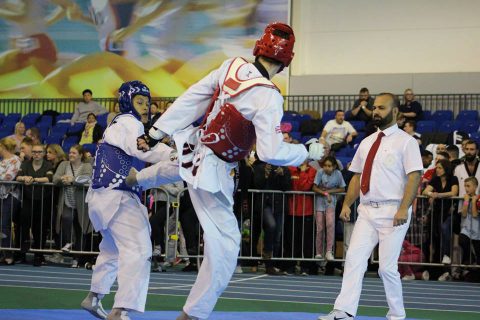
Kyorugi (Sparring/Fighting): The practical application of kicks, punches and blocks against an actual opponent in a controlled, safe environment. In a sparring competition, speed, skill, precision and confidence are the deciding factors.
KYULPA
Kyulpa (Breaking): Demonstrations of skill and power in breaking boards, bricks and other material items. Breaking focuses on mental power, concentration, and speed – demonstrated on a material object because it cannot be demonstrated on a human being in a practical manner.
HOSINSOOL
Hosinsool (Self-Defence): The study of how to protect oneself by using an attacker’s strength, skill and/or weapons against him/her. Most self-defence techniques teach a student how to overcome an attacker with moves to disable or disarm the person in order to get away from the situation and then let the proper authorities sort out the details.
-
"It has taken me several years to become an International Referee and International Coach, it would not be possible without the support of ANTF. I have been working with ANTF since 2007, I have found honest value and really great people in ANTF."
-
"It has taken me several years to become an International Referee and International Coach, it would not be possible without the support of ANTF. I have been working with ANTF since 2007, I have found honest value and really great people in ANTF."
-
"It has taken me several years to become an International Referee and International Coach, it would not be possible without the support of ANTF. I have been working with ANTF since 2007, I have found honest value and really great people in ANTF."
ANTF OVERVIEW
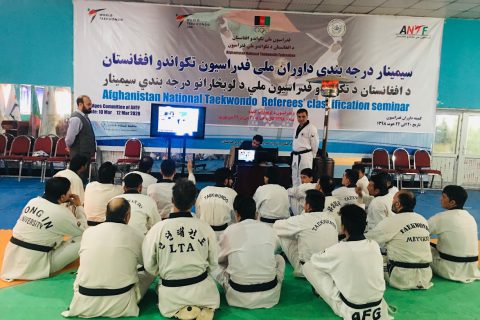
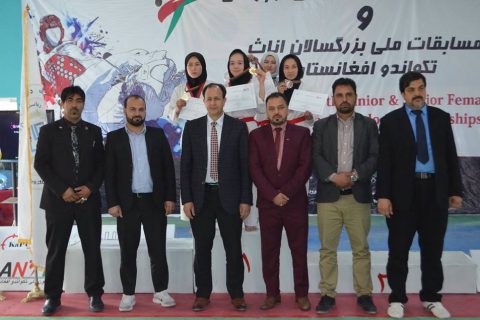
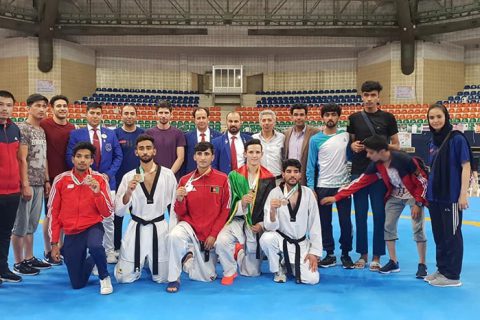
ANTF stands for Afghanistan National Taekwondo Federation, which was founded in 1993. ANTF is the MNA (Member National Association) of the World Taekwondo and member of Asia Taekwondo Union.
OUR MISSION
To govern, grow and promote Taekwondo throughout Afghanistan, from a grassroots level through to an elite level, so that everyone will have the opportunity to play, watch and enjoy the sport without any discrimination.
POPULAR QUESTIONS
-
What is Taekwondo?
Taekwondo originated in Korea over 2,000 years ago. “Tae” means to kick or smash with the foot; “Kwon” means to strike with the hand or fist; “Do” means the skills of blocking, dodging, foot sweeps, and joint locks to form a very effective style of self-defence. Physically, Taekwondo will help you control your weight, tone your body, and improve your cardiovascular and respiratory systems
-
What is KYORUGI?
KYORUGI is a Korean word which means sparring. Sparring is the safe equivalent of fighting for your life! It is testing your martial art skills against another person in a controlled environment.
There are generally four different kinds of sparring in Taekwondo:
- Full contact (Olympic style)
- Light contact
- No contact
- Step sparring
-
What is Poomse?
Poomse is Taekwondo patterns or forms: Choreographed demonstrations of the various kicks, blocks and hand techniques of Taekwondo, practised against an imaginary opponent. Observing a skilled poomse practitioner is like watching a ballet dancer; both arts are very graceful and controlled. Forms are used to develop concentration, balance, precision, reflex action, power, speed and agility. Students usually learn beginning poomses at the yellow belt level. We discuss more Poomse since this is a rather involved subject.
-
What is Kyulpa?
Kyulpa means Breaking: Demonstrations of skill and power in breaking boards, bricks and other material items. Breaking focuses on mental power, concentration, and speed – demonstrated on a material object because it cannot be demonstrated on a human being in a practical manner.
-
What is Kyulpa?
Hosinsool stands for Self-Defence: The study of how to protect oneself by using an attacker’s strength, skill and/or weapons against him/her. Most self-defence techniques teach a student how to overcome an attacker with moves to disable or disarm the person in order to get away from the situation and then let the proper authorities sort out the details. Self-defence is the original reason Taekwondo was developed.




© Copyright 2020 ANTF Designed by Abdul Halim Yousufzai